The Psychology of Speak Up
Has it ever happened that you should have reported an incident but didn’t? Why not?
Has it ever happened that you should have reported an incident but didn’t? Why not?
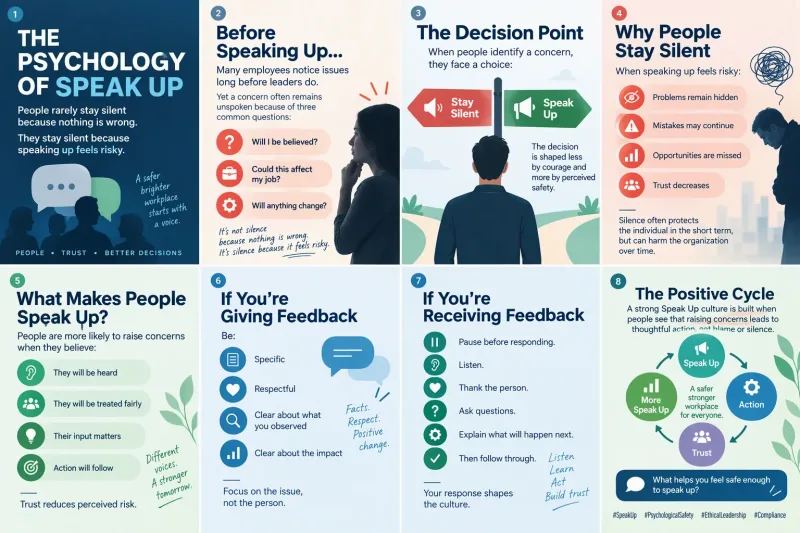
In spite of the fact that employees often know earlier compliance cases than managers, people many times stay silent not because nothing is wrong, but because speaking up feels risky:
Will I be believed?
Could this affect my job?
Will anything change?
Culture can shape how people raise concerns. In some settings, direct challenge is welcomed; in others, hierarchy, harmony or indirect communication matter more. These are tendencies, not stereotypes - and a good Speak Up culture makes room for different ways of speaking.
If you’re giving feedback, be specific, respectful and clear about what you observed and how it affected you.
If you’re receiving it, pause before responding. Listen. Thank the person, ask questions and explain what will happen next. Then follow through.
Trust grows when people see that speaking up leads to thoughtful action - not blame or silence.
What helps you feel safe enough to speak up?