AI Policy and Human Oversight
Two Essentials for Applying the EU AI Act
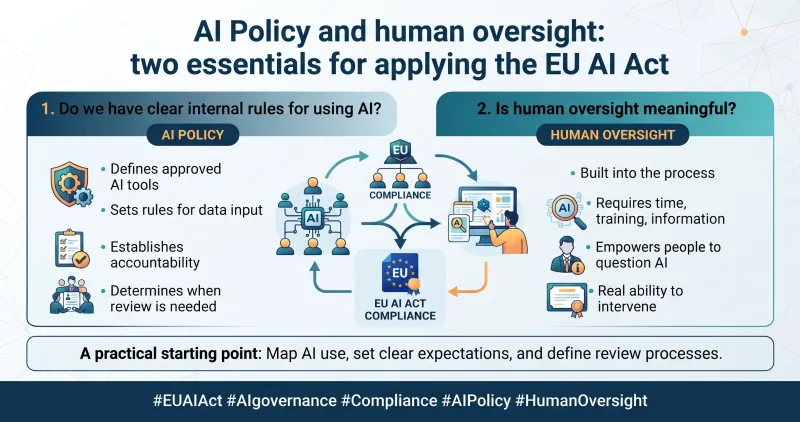
An AI policy can set the rules. Human oversight helps make sure they work in practice.
As organisations introduce AI tools, two questions matter:
1. Do we have clear internal rules for using AI?
An AI Policy can explain which tools are approved, what information employees may enter, who is accountable, and when AI-generated content or decisions need review. Without clear guidance, people may use AI in inconsistent ways - or share information they shouldn’t.
2. Is human oversight meaningful?
For high-risk AI systems, the EU AI Act requires human oversight. But a person who lacks the time, training, information or authority to question an AI output cannot effectively oversee it. Human oversight needs to be built into the process, with a real ability to intervene when needed.
A practical starting point is to map where AI is used, set clear internal expectations, and define who reviews outputs and what happens when something seems wrong.
AI governance is more than having a policy on paper or a person in the loop. It’s making sure people know what to do - and have the ability to do it.